

The Future of Healthcare: VR Innovations in Japan
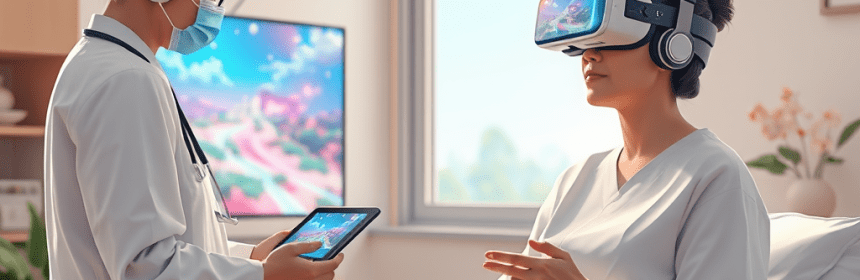
Japan is entering a transformative era in healthcare. Virtual Reality (VR) is revolutionizing rehabilitation, surgical planning, and patient care. It is projected to grow at a staggering 38% annually through 2030.
How VR Is Reshaping Japan’s Healthcare Landscape
Japan is leveraging VR to address its aging population and healthcare workforce challenges. Here’s how:
Remote Rehabilitation and Therapy
- VR-based remote rehabilitation systems are gaining traction, especially for stroke and orthopedic recovery. These systems allow patients to perform guided exercises at home while being monitored by clinicians.
- The market for remote rehabilitation using VR is projected to grow from $0.3 billion in 2024 to $1.1 billion by 2033, driven by AI integration and personalized therapy.
Surgical Planning and Medical Training
- Companies like HoloEyes are using VR to create 3D anatomical models from CT scans, enabling surgeons to rehearse complex procedures in immersive environments.
- Medical students and professionals benefit from interactive simulations, reducing reliance on cadavers and enhancing procedural accuracy.
Mental Health and Pain Management
- VR is being used to treat phobias, PTSD, and chronic pain through immersive distraction therapy and exposure techniques.
- Patients undergoing chemotherapy or painful procedures report reduced anxiety and discomfort when immersed in calming VR environments.
Market Outlook and Growth
- Japan’s VR healthcare market is expected to reach $1.03 billion by 2030, up from $139.5 million in 2024.
- This represents a compound annual growth rate (CAGR) of 38% from 2025 to 2030, one of the fastest-growing segments in digital health.
Innovation Drivers
- AI and IoT integration are enhancing VR’s capabilities, enabling real-time feedback, adaptive therapy, and predictive diagnostics.
- Government support for digital health transformation and aging care solutions is accelerating adoption.
Leading Companies in Japan
- HoloEyes (Tokyo): Specializes in VR surgical visualization.
- Jolly Good Inc.: Develops VR content for mental health and dementia care.
- MediVR: Focuses on rehabilitation and cognitive training.
Source: Grand View Horizon, ensun, LinkedIn
 MNL.OP INC